How to Prepare Formula Bottles Safely
A step-by-step guide to mixing and storing formula, built from the AAP. Follow the label on your formula as well.
We may earn a commission when you buy through links on this page, at no extra cost to you. This does not change which products we cover. How we make money.
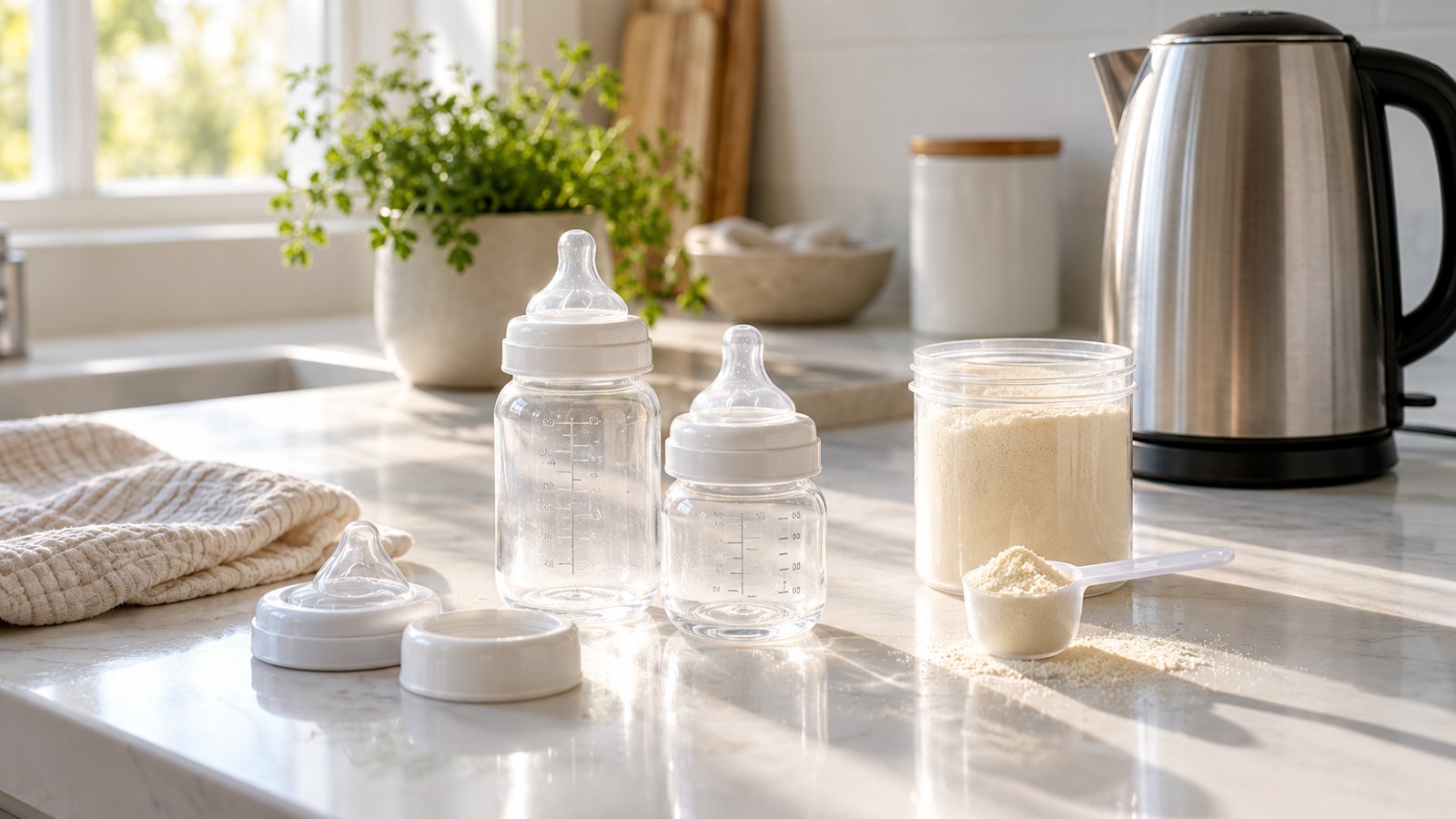
Mixing formula takes a minute, but the order and the water matter. The AAP’s short version: wash your hands, put the water in first, add the exact amount of powder the label calls for, and throw out what is left within an hour.
Step by step
- Start clean. Wash your hands with soap and water, or use a sanitizer with at least 60% alcohol. Wipe down the prep area. Rinse and dry the top of the formula can before you open it.
- Pick your water. Use water from a safe source. If you are unsure about your tap water, use bottled water or bring cold tap water to a rolling boil for 1 minute, no longer.
- Boil for the youngest babies. For babies under 2 months, preterm babies and babies with a weakened immune system, the AAP says to use boiled water, let it cool about 5 minutes, then mix.
- Water first, then powder. Add the powder to the water in the bottle, using the amount on the container. Do not add extra water or extra powder.
- Cool or warm to body temperature. Cool a hot bottle under running cool water or in an ice bath. Formula made with room-temperature water is ready to feed as is.
- Test it. Shake a few drops on the inside of your wrist.
Storage rules
| Situation | AAP limit |
|---|---|
| Bottle your baby has started | Throw out within 1 hour |
| Prepared bottle, untouched, in the fridge | Up to 24 hours |
| Opened ready-to-feed or concentrated formula | Cover, refrigerate, throw out after 48 hours |
The AAP suggests 2 to 4 oz batches so less goes to waste, labels with the date and time, and storing bottles at the back of the fridge, where the temperature stays steadier than in the door.
Cleaning bottles
The AAP says boiling bottles is not required. A dishwasher with heated water and a hot dry cycle works, as does hot soapy water and a thorough rinse. Scrub nipples in hot soapy water even if you use disposable liners and ready-to-use formula.
What not to do
- Do not put cereal or other food in a bottle. The AAP says it raises choking risk and will not help a baby sleep longer.
- Do not dilute formula to stretch it.
Feeding at night? Our safe sleep checklist covers moving your baby back to their own sleep space.
Frequently asked questions
Do I need to boil water for formula?
The AAP says to use boiled water, cooled for about 5 minutes, for babies under 2 months, babies born prematurely and babies with a weakened immune system. For other babies, safe tap water is fine. If you are unsure about your tap water, use bottled water or boil cold tap water for 1 minute.
How long can a prepared bottle sit out?
The AAP says to throw out formula within 1 hour after your baby starts feeding from the bottle.
How long does prepared formula keep in the fridge?
Prepared formula your baby has not touched keeps up to 24 hours in the refrigerator. An opened container of ready-to-feed or concentrated formula should be covered, refrigerated and thrown out after 48 hours.
Do I need to sterilize bottles?
The AAP says you do not need to boil bottles. A dishwasher with heated water and a hot drying cycle, or a wash in hot soapy water with a thorough rinse, kills most germs.
Can I add cereal to the bottle?
No. The AAP says cereal in a bottle will not help a baby sleep longer and raises the risk of choking.