Safe Sleep Checklist for Cribs and Bassinets
What CPSC and the AAP say about where and how a baby should sleep, plus what to look for when you buy a crib, bassinet or play yard.
We may earn a commission when you buy through links on this page, at no extra cost to you. This does not change which products we cover. How we make money.
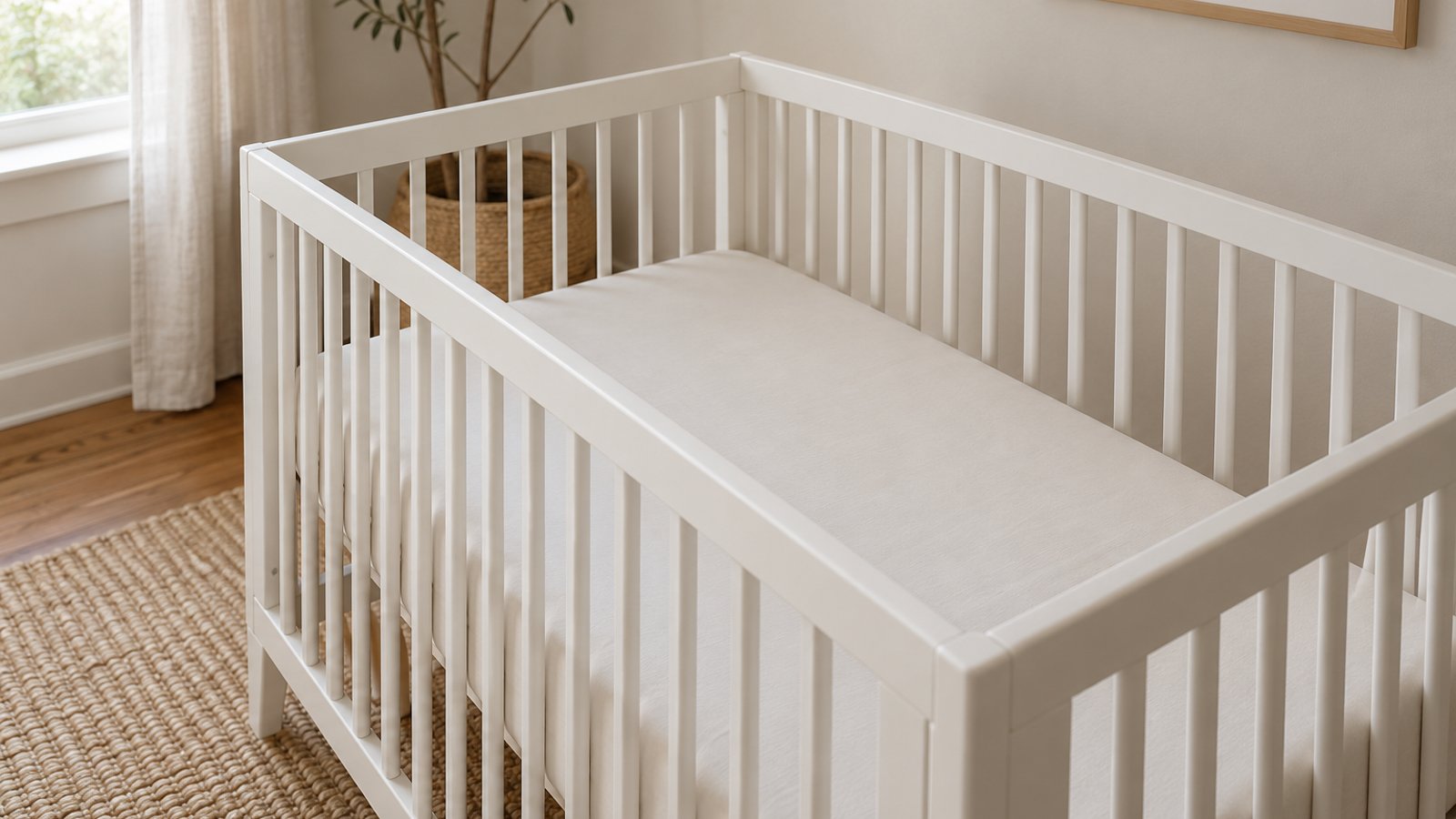
The AAP says about 3,500 babies in the US die suddenly and unexpectedly during sleep each year. A safe sleep space lowers that risk, and the rules are short: back to sleep, a firm flat surface, nothing in the crib but a fitted sheet, and a room shared with you but not a bed.
The checklist
- Back to sleep, every time. Place your baby on their back for naps and at night. The AAP says side sleeping is as dangerous as stomach sleeping. Once a baby rolls both ways on their own, you do not need to keep turning them back.
- Firm and flat. The surface should not indent under your baby. The AAP says any surface inclined more than 10 degrees is unsafe for sleep.
- Bare is best. CPSC: nothing but a fitted sheet in a crib, bassinet or play yard. No pillows, blankets, bumpers or toys.
- No weighted products. CPSC and the AAP both say no weighted blankets, sleepers or swaddles.
- Room share, do not bed share. The AAP recommends room sharing for at least the first 6 months and says it can lower SIDS risk by as much as 50%. Never sleep with a baby on a couch or armchair: the AAP puts that risk at up to 67 times higher.
- Move a sleeping baby. If your baby falls asleep in a car seat, stroller, swing or carrier, move them to a firm, flat sleep space on their back.
- Dress them, do not cover them. Use layers or a wearable blanket, one layer more than you wear. The AAP warns that overheating raises SIDS risk.
- Try a pacifier. The AAP says pacifiers at naps and bedtime lower SIDS risk. If you breastfeed, wait until feeding is established. Never hang one around the neck.
Buying a crib, bassinet or play yard
- Buy a product made for sleep. CPSC says to use a crib, bassinet, play yard or bedside sleeper that meets federal requirements. The AAP adds that since a June 2021 CPSC rule, any infant sleep product must meet one of those standards.
- Skip products sold for lounging. The AAP names baby nests, pods, in-bed sleepers and inclined sleepers as unsafe unless they meet those standards.
- Check the mattress fit. The AAP says the mattress should be made for your crib and fit tight.
- Check recalls. Look up any crib, new or used, at SaferProducts.gov. Do not use a crib that is broken, missing hardware or missing its instructions.
- Be wary of SIDS claims. The AAP says there is no evidence that products claiming to reduce SIDS do so.
Swaddling
Swaddling is fine, but the AAP says it does not lower SIDS risk. Keep a swaddled baby on their back, leave room for the hips and for breathing, and stop when your baby starts trying to roll.
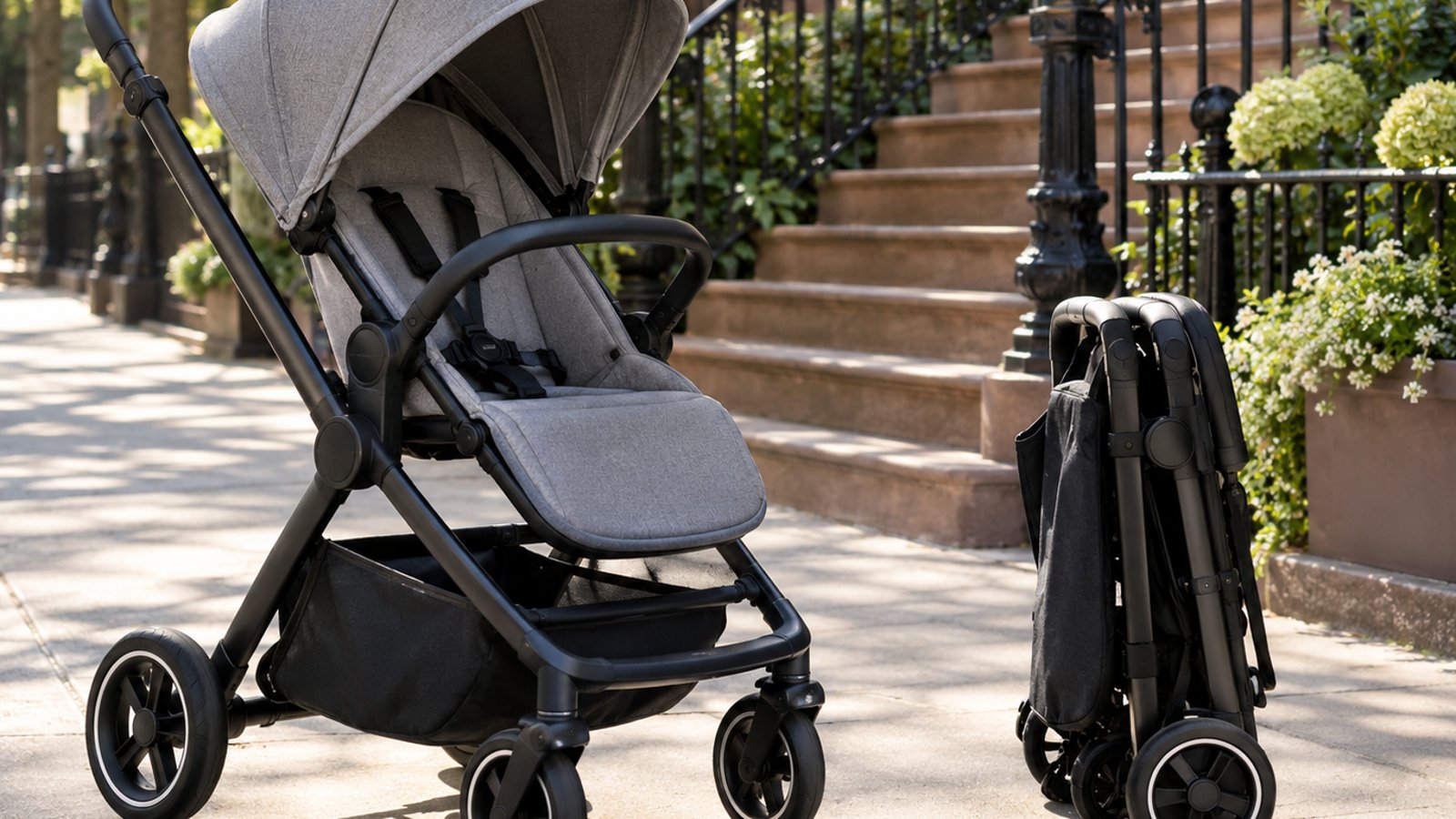
For gear that moves with you, see our stroller comparison. A stroller is not a sleep space.
Frequently asked questions
Can I use a crib bumper?
No. The AAP lists bumper pads and products that attach to crib slats or sides among the soft items to keep out of the sleep area. CPSC says nothing but a fitted sheet.
Is it safe for my baby to sleep in a swing or rocker?
No. CPSC says inclined products with an angle greater than 10 degrees, such as rockers, gliders, soothers and swings, should never be used for infant sleep.
How long should my baby sleep in my room?
The AAP recommends room sharing, with the baby in their own sleep space, for at least the first 6 months. It advises against bed sharing.
Do baby monitors that track heart rate prevent SIDS?
The AAP says there is no evidence that consumer heart rate or pulse oximetry monitors reduce SIDS risk, and that they should not replace safe sleep practices.
When should I stop swaddling?
The AAP says to stop when your baby looks like they are trying to roll over, which usually happens around 3 to 4 months, and sometimes earlier.